Driveway Aprons and Street Approaches in Naperville
The last stretch of your driveway, from the public walk to the curb, sits on city land and follows a city spec, and it is still yours to maintain. We pour and replace aprons with the permit inside the quote.
- Licensed & Insured
- Right-of-Way Permits Handled
- Free On-Site Quotes
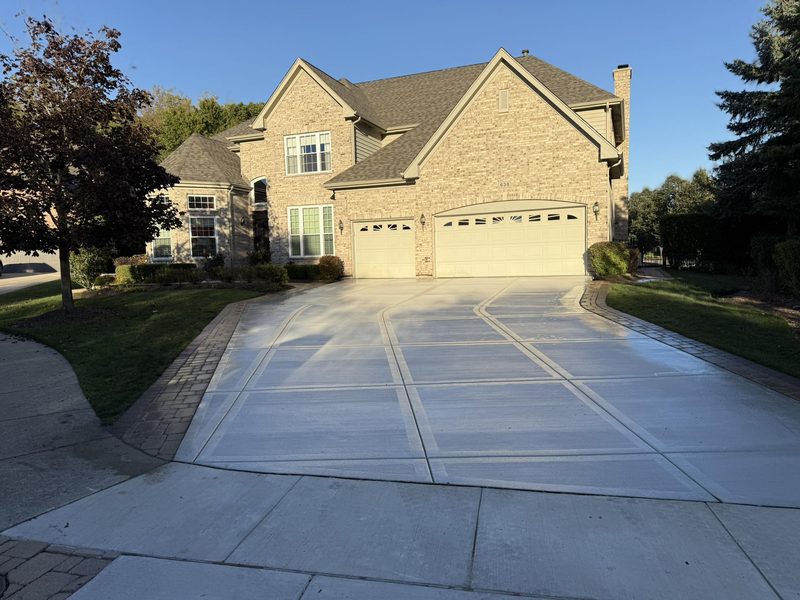
Who Owns and Maintains a Driveway Apron in Naperville
Walk your driveway from the garage door to the street and you cross a line most owners never see. Here is each piece of concrete in order, what the city requires of it, and who pays when it breaks.
-
Private
Garage door slabMaintained by you
Some people call this the garage apron. It is part of the garage floor, not the street apron this page is about, and fixing it is covered on our garage floor repair page.
-
Private
Private drivewayMaintained by you
4 inches of concrete over 2 inches of compacted stone, 5 inches if stamped. Wire mesh or rebar is allowed here.
-
Property line
Where the right of way starts
Usually not where the lawn changes. It is on your plat of survey, the permit drawing is dimensioned from it, and the driveway can be no wider than 20 feet where it crosses it.
-
Right of way
Public sidewalk crossingMaintained by you
The public walk runs straight through the driveway. Where it crosses, it has to be at least 6 inches of concrete on 2 inches of aggregate, with a cross slope of no more than 2 percent. The rest of the public sidewalk is its own job.
-
Right of way
Driveway apronMaintained by you
6 inches of plain concrete over 2 inches of compacted CA-6 stone, 7 inches if stamped. No reinforcement allowed. A 1/2-inch preformed bituminous expansion joint where it meets the sidewalk and where it meets the curb.
-
Right of way
Curb flare
The apron widens 2 feet on each side as it meets the curb and gutter, so a 20-foot driveway can reach 24 feet at the street.
-
Street
Curb, gutter, and pavement
The city’s.
So who owns the driveway apron? The ground is public right of way. The city writes the spec and inspects the work before anything is poured. And Naperville code holds the homeowner responsible for maintaining the apron and the sidewalk section the driveway crosses. The city sets the rules and you pay for the repairs, which is why an apron replacement gets quoted as its own job, with the city’s spec in it.
Tell us about your project
Takes about 60 seconds. We’ll get back to you within one business day to schedule a free on-site visit.
Naperville Driveway Apron Permit, Inspection and Spec
Naperville requires a driveway permit to build a driveway onto a public street, or even to dig for one, so every apron replacement needs one. We pull it, and its cost is inside our quote. Here is the order an apron job runs in.
-
Plat of survey and the permit application
The new apron is drawn and dimensioned on a copy of your plat of survey and filed through the city’s Civic Access portal. The city quotes right-of-way plan review at 14 calendar days, so the permit, not the concrete, usually sets the start date.
-
A contractor licensed for the right of way
Naperville requires a sidewalk contractor’s license for concrete work in the right of way. Depending on how much work is involved, the city can also make the contractor post a maintenance bond that runs for one year after the job is finished. Ask anyone quoting your apron about both.
-
JULIE locates before digging
The contractor has to call JULIE before excavating so buried utilities get marked. The parkway between the walk and the street is where service lines run to the house, so the marks matter here more than anywhere else on the driveway.
-
Stone, forms, and the city inspection
Every public concrete installation is inspected by the city before the pour, booked at least 48 hours ahead. If the work isn’t ready when the inspector arrives, it fails and has to be rebooked, so we don’t schedule the inspection until the stone is compacted and the forms are set.
-
The right-of-way concrete mix
The concrete comes from a certified ready-mix plant: IDOT class PV or SI, 5 to 8 percent entrained air, a slump of 2 to 4 inches at most, and no calcium chloride. The city can ask to see the computerized delivery ticket. Public work gets a cure-and-seal compound after finishing.
-
Parkway restoration
The parkway dug up for the forms gets backfilled, topsoiled, and restored with seed or sod. The permit requires it, so it is in our quote.
Replace Just the Driveway Apron, or the Whole Driveway?
Aprons fail first. They take the plow, the salt slush off the street, and the corner every car cuts on the way in, and they sit on the ground most likely to have been dug up for utility work. So we often find a driveway that is sound from the garage to the sidewalk, with a broken apron at the end of it.
When that is your driveway, we’ll quote the apron alone. It is a smaller job than a full tear-out, and you should hear that from the contractor. We saw-cut at the property line, break out the apron and the sidewalk crossing if it’s damaged too, rebuild the stone, and pour to the right-of-way spec with expansion joints at the curb and the walk.
It works the other way too. If the private side is already cracking into pieces that sit at different heights, a new apron in front of it buys you very little. Doing both at once means one permit, one mobilization, and joints that line up. That is a full driveway replacement, which is a different job.
Either way, expect a color difference. New concrete cures lighter than a slab that has weathered for years, so a new apron in front of an old driveway will look new for a couple of seasons. We have been in concrete for over 30 years, and on aprons most of that experience goes into where to cut and how the joints line up.
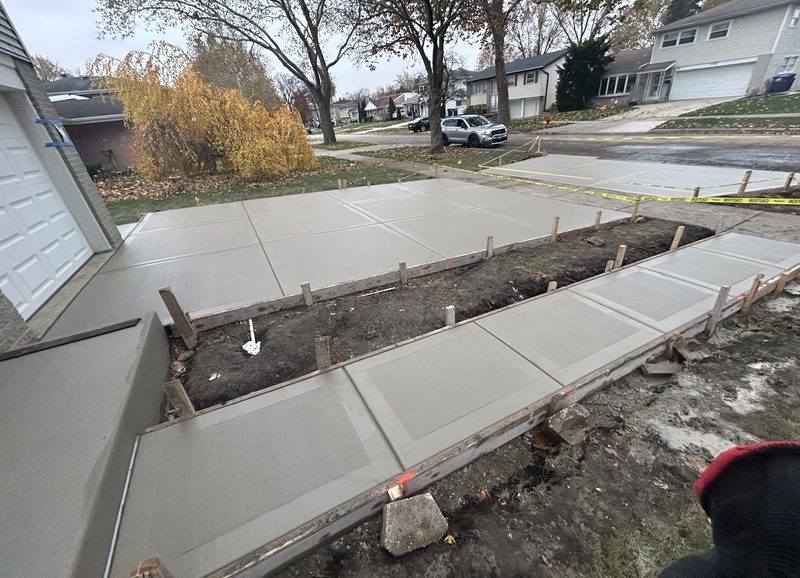
Why Driveway Aprons Crack and Sink at the Curb
Snowplows catch the edge
A plow blade riding the gutter line hits the street edge of the apron every storm. Chipped corners and a broken strip along the curb are the usual result, and they get worse each winter once water can get into the break.
Road salt from the street
Salty slush sprays off the road and sits on the apron longer than on any other part of the driveway. Salt water soaks into the surface, freezes, and the top starts to flake. The city’s air-entrained mix and the cure-and-seal compound on public work are there to slow that down.
Settlement over utility trenches
The parkway is where water and gas lines and other services cross to the house, and where they get dug up when they need work. Backfill that went back in loose keeps settling for years, and an apron poured over it drops with it, often along a line across the drive. The fix is to dig out and recompact the base under that strip before pouring, not to patch the crack.
Frost in wet ground
Wet ground under an apron heaves when it freezes. With no reinforcement allowed in the right of way, a Naperville apron depends on its 6 inches of thickness and the compacted stone under it. Where the base is thin or holds water, the slab cracks and the pieces move on their own.
A sunken apron that is still in one piece can sometimes be raised by a slab lifting company. Our work is replacing aprons that have broken, and we’ll tell you if yours looks like a lifting job instead.
Widening a Driveway Apron: Curb Flare, Curb Cut and Width Limits
Most widening calls come from a two-car garage feeding a one-car apron. In Naperville the limits are drawn in the city’s standard detail for a residential driveway:
- 20 feet maximum at the right-of-way line, which is your property line.
- A 2-foot flare each side where the apron meets the curb and gutter.
- No crossing the property line extension. The apron can’t swing out in the parkway in front of your neighbor’s lot.
- No driveways in easements.
- A second driveway only if the lot has more than 75 feet of frontage and the two widths added together come in under (frontage ÷ 75) × 20. At 100 feet of frontage, that means under about 26.7 feet combined.
A wider apron needs a wider opening at the curb. That curb work is drawn on the permit plan, reviewed with it, and priced inside our apron quote.
Stamped or Decorative Apron? The Encroachment Agreement
Naperville allows a decorative apron, with conditions. If the apron is stamped, colored, or exposed aggregate concrete, brick pavers, stamped asphalt, or any other decorative surface, a Right-of-Way Encroachment License Agreement has to go in with the driveway permit application. A stamped concrete apron also has to be 7 inches thick over 2 inches of stone, an inch more than a plain one.
Our advice, even though the stamped apron is the bigger job: pour the apron plain and stop the decorative work at the property line. The apron takes the plow, the salt, and the turning tires. It is the piece you have to maintain, and it sits in the ground that gets dug up when utilities need work. A plain broom-finish apron is the cheapest thing to put back.
If you want it anyway, we pour it to the 7-inch spec and file the agreement with the permit. The patterns and colors are on our stamped concrete page. This page covers concrete aprons; asphalt and paver aprons are a different trade. Heating the apron brings its own city requirements, covered on our heated driveways page.
When Driveway Aprons Can Be Poured in Naperville
Concrete in the driveway apron and the public sidewalk can only go in from April 15 through November 15, weather permitting. Inside that window the city still won’t accept a pour on frozen subgrade or in the rain. When low temperatures are forecast, the new concrete needs cold-weather protection for at least 96 hours, and after October 1 or before May 15 the city may require it to be covered.
So a call in December gets a spring date, even when the old apron is a mess. We would rather book you for late April than pour a slab the city can reject. In the fall, the 14-day plan review and the 48-hour inspection notice both come out of the same shrinking window, so call early.
Plan on 7 days before you drive on a new apron. Cold weather stretches that, and we’ll give you the adjusted date in writing.
Driveway Apron Cost in Naperville: What Moves the Price
Our published range for concrete driveway work is $10 to $20 per square foot installed. An apron on its own rarely fits that math, because a small pour carries the same fixed costs as a big one: the permit, the inspection, getting a crew and a saw on site, the concrete delivery, and the haul-off. We quote aprons after we measure, and these are the things that move the number.
6 inches in the right of way against 4 on the private side, 7 if stamped.
Cracked or sunken squares where the walk crosses go in with the apron, at 6 inches.
Widening adds break-out, forming, and work at the curb opening.
Rebuilding the stone over a settled utility trench costs more than pouring on sound ground.
Backfill, topsoil, and seed or sod where the forms went.
The extra inch of concrete, the stamping, and the encroachment agreement.
If the driveway or the front walk is due soon too, pricing it with the apron is usually the cheapest that concrete will ever be, because the fixed costs are already paid.
Driveway Apron FAQ
Is the driveway apron my responsibility in Naperville?
Yes, for upkeep. The apron sits in the public right of way, but city code holds the property owner responsible for maintaining it and the sidewalk section the driveway crosses. The city sets the spec and inspects any replacement before it is poured.
Do I need a permit to replace a driveway apron in Naperville?
Yes. Naperville requires a driveway permit to build a driveway onto a public street or to dig for one. It is filed through the city’s Civic Access portal with the work dimensioned on your plat of survey, and the city quotes right-of-way plan review at 14 calendar days. We pull it as part of the quote.
Can you replace just the driveway apron?
Yes, and often that is all a driveway needs. We cut at the property line, replace the apron and any damaged sidewalk crossing, and pour to the city’s right-of-way spec. If the private side is failing too, doing both at once is usually cheaper than two separate jobs.
Can a driveway apron have rebar or wire mesh in Naperville?
Not a plain concrete apron. The city calls for 6 inches of plain concrete over 2 inches of compacted CA-6 stone in the right of way, with no reinforcement allowed. Mesh or bars are allowed on the private side of the driveway.
How wide can a driveway apron be in Naperville?
Up to 20 feet at the property line, with a 2-foot flare on each side at the curb. The apron can’t cross the extension of your side property line or sit in an easement. A second driveway needs more than 75 feet of frontage and has to fit the city’s width formula.
Can I have a stamped driveway apron in Naperville?
Yes. A Right-of-Way Encroachment License Agreement has to be filed with the permit application, and stamped concrete in the apron has to be 7 inches thick. We’ll pour one if you want it, but we usually recommend keeping the apron plain.
Is the driveway apron the same as the garage apron?
No. The garage apron is the slab at the overhead door, part of your garage floor and entirely on your property. The driveway apron is at the other end, between the public sidewalk and the street curb.
When can a driveway apron be poured in Naperville?
From April 15 through November 15, weather permitting, and never on frozen ground or in the rain. Calls that come in over the winter get a spring date.
How soon can I drive on a new driveway apron?
Plan on 7 days. Cold weather stretches that, and we’ll give you the adjusted date in writing.
Other Concrete Services
Broken apron at the end of your driveway?
Call or fill out the form. Either way, we'll be in touch within one business day.